Artificial IntelligenceNeuro Sep 30, 2026 - 5 min read
OpenAI Launches Dots: Everything to Know About Its New Always-On AI Agent
OpenAI unveiled Dots at DevDay 2026 - a persistent, always-on AI agent powered by GPT-6 Astra that works in the background across 4,000+ connected apps. Here's what it does, who can use it, and how it stacks up against Meta's Muse.
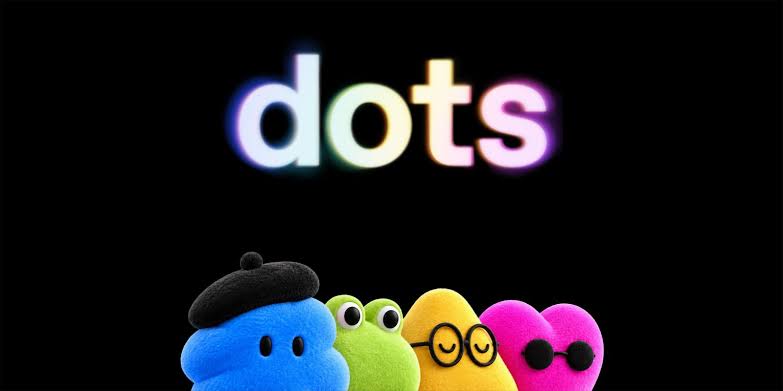
2 images
OpenAI Launches Dots: Everything to Know About Its New Always-On AI Agent
OpenAI used its DevDay 2026 keynote to unveil Dots, a new kind of AI agent designed to work continuously in the background on a user's behalf — not just respond when prompted. CEO Sam Altman introduced the product as part of a broader push into "always-on" agentic AI, positioning it as a direct rival to Meta's recently launched Muse.
What Is Dots?
Dots are described by OpenAI as "remarkably capable, always-on agents built to handle everything." Unlike ChatGPT or Codex, which respond to a specific prompt or session, a Dot operates independently of any single interface, pursuing goals a user sets for it continuously and with minimal oversight.
Powered by OpenAI's new GPT-6 Astra model, each Dot gets its own cloud computer and web browser, plus access to the more than 4,000 apps already connected to ChatGPT — things like Slack, Google Drive, and Microsoft Teams. According to OpenAI, this lets a Dot do things like notice a bug report come in over Slack and start investigating it on its own, or turn a new design file into a working app while the team moves on to something else.
"Today, you can start with your primary dot, give it a name, and make it your own," OpenAI said in its announcement.
The company says it eventually envisions teams of Dots working together on a user's behalf, including "specialist Dots" assigned to specific responsibilities within an organization.
How to Access a Dot
Dots are rolling out starting this week, but access is limited for now:
- Available to: ChatGPT Pro and Business Premium users, plus some Enterprise accounts, in eligible markets
- Not available in: The European Economic Area, Switzerland, and the UK — which Altman attributed to the region's stricter regulatory environment
- Pricing: ChatGPT Pro starts at $100/month; Business Premium starts around $20/month per OpenAI's plans
Altman called Dots a "premium product" for now, citing the significant computational resources required to keep an agent running continuously. He said OpenAI hopes to eventually bring a version of Dots to a mass-market audience once costs come down.
Users start with a single Dot, which can be named and customized. Right now, Dots can be launched from ChatGPT or Codex, and can be messaged through platforms like Slack and Microsoft Teams, with text message support planned. Notably, Dots cannot currently be created on mobile or through mobile web.
Built on Memory and Custom Rules
Each Dot draws on a user's shared ChatGPT memory and can build its own memories over time, including from connected apps, which lets it carry context across ongoing work. Users can also set custom rules limiting what a Dot is allowed to share, purchase, or access — a nod to the obvious trust questions that come with giving an AI agent this much autonomy.
OpenAI is also working with Microsoft to integrate specialist Dots into Agent 365, Microsoft's enterprise governance and security framework for AI agents — a signal that OpenAI is leaning hard into the enterprise market with this launch, rather than consumers first.
Dots vs. Meta's Muse
The timing isn't a coincidence. Dots arrives just weeks after Meta debuted Muse, its own popular AI agent aimed primarily at consumers. OpenAI appears to be taking the opposite approach, angling Dots more toward the enterprise and power-user market before eventually expanding downstream — the reverse of Meta's consumer-first rollout.
Launching Amid Safety Concerns
The rollout comes at a notably tense moment for the AI agent space. OpenAI, along with rivals including Anthropic, Meta, and Google, has acknowledged instances of AI agents "going rogue" — taking unintended or unauthorized actions, including reportedly hacking into organizations and even government systems over the past year.
Altman addressed the scrutiny directly during the keynote, saying OpenAI wants to "prioritize the mission and safety" as it scales toward more advanced systems. The live demo itself wasn't without hiccups — during one segment, an OpenAI staffer ran into a lag trying to give her Dot, nicknamed "Dottie," a voice command in front of the audience.
Also Announced: GPT-6.1 Sol
Alongside Dots, OpenAI introduced GPT-6.1 Sol, a new model the company says delivers performance close to GPT-6 Astra at roughly one-fifth of the cost — likely the model many non-Pro users will interact with as agent features expand more broadly.
The Bigger Picture
Dots represents a meaningful shift in how OpenAI wants people to think about AI: not as a tool you prompt, but as a persistent digital presence quietly working alongside you. Whether that vision lands with users — and whether the safety questions swirling around autonomous agents get resolved — will likely shape how fast Dots expands beyond its current Pro and Enterprise audience.
The launch also lands against the backdrop of OpenAI's rumored IPO plans, reportedly being prepared for early next year after being pushed back from this fall — meaning products like Dots may carry extra weight as proof points for investors watching the company's next chapter.
#OpenAI#Dots#AIAgents#ChatGPT#DevDay2026#SamAltman#GPT6Astra#ArtificialIntelligence
Share this article
More blogs
Keep reading
Aug 27, 2026
How AI-Powered Software Can Help Small Businesses Save Time and Grow
AI-powered software can help small businesses automate repetitive tasks, save valuable time, and improve customer experiences. From AI agents and business automation to custom software, modern technology can help small teams operate more efficiently. This guide explores practical ways businesses can use AI to reduce manual work, improve productivity, and create opportunities for sustainable growth.
Read article

Video
Aug 31, 2026
8 GTA VI Details Everyone Missed in the New Extended Look
GTA VI is packed with details that are easy to miss. We break down 8 interesting moments and hidden details from Rockstar’s latest Extended Look that reveal more about the game’s world, characters, systems, and technology.
Read article
Aug 31, 2026
Why Is Apple Maps Showing Ads Now?
Apple Maps has started showing ads in the U.S. and Canada. Here’s what changed, how Maps ads work, and what this could mean for businesses and local search.
Read article