TechnologyNeuro
Riemann Hypothesis Solved? Two Rival Proof Claims Explained
Two rival proofs of the Riemann hypothesis appeared on November 20, 2026, one made with AI. Here is what is claimed, what is verified and what happens next.
0 viewsNov 21, 2026 - 3 min read
Has the Riemann Hypothesis Been Solved.
Not yet confirmed. On Friday, November twentieth, twenty twenty six, two separate claims of a proof appeared on the same day. One was made with the help of artificial intelligence, and one was written entirely by a human. Neither has been checked and accepted by the mathematics community, so the problem is still officially open.
What Is the Riemann Hypothesis.
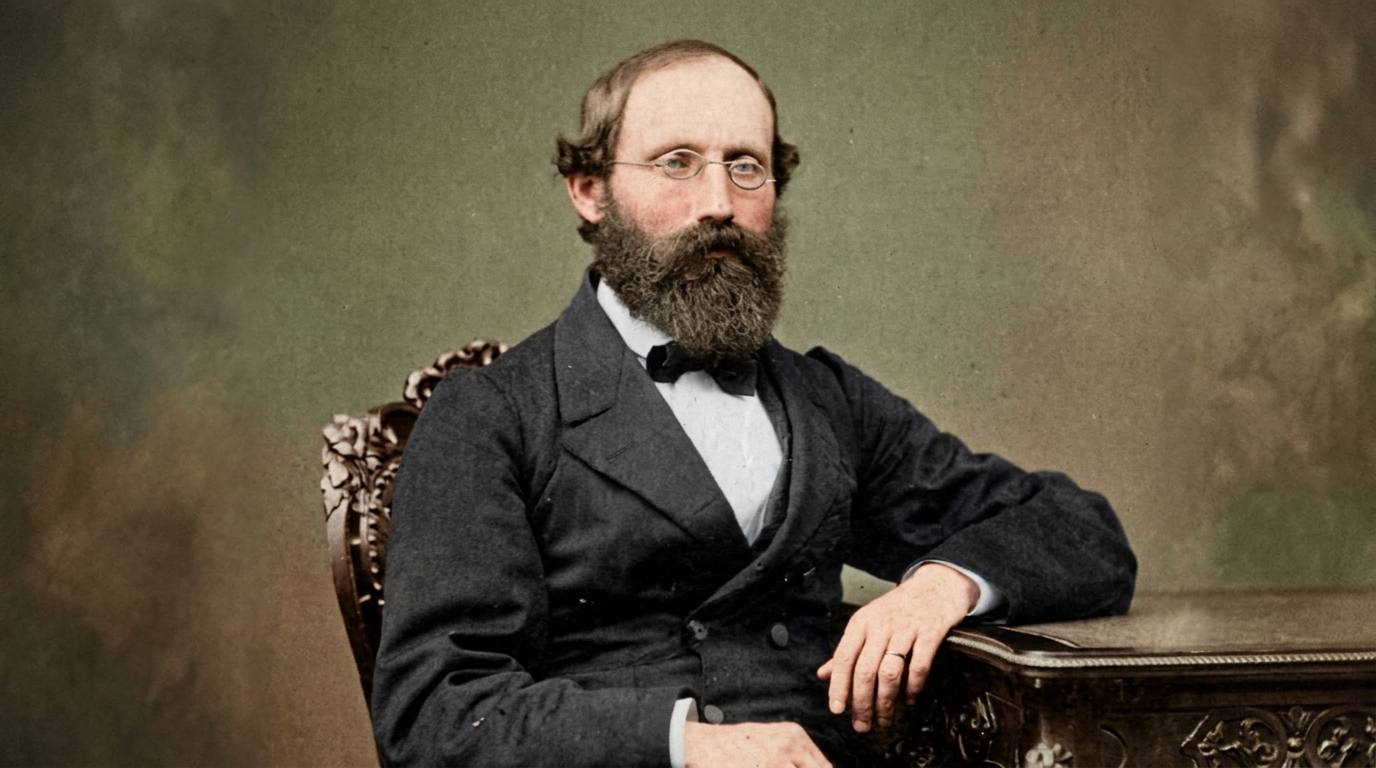
The Riemann hypothesis is the most famous unsolved problem in mathematics. German mathematician Bernhard Riemann first posed it in eighteen fifty nine. It is about prime numbers, the numbers that can only be divided by one and themselves. It says that a special function, called the Riemann zeta function, has all of its important zeros lined up on one single line. The Clay Mathematics Institute lists it as a Millennium Prize Problem, with a prize of one million dollars.
What Is the Generalized Riemann Hypothesis.
The generalized Riemann hypothesis, often called GRH, is a stronger version of the same idea. It applies the same statement to a wider family of functions, called Dirichlet L functions. If it is true, the original Riemann hypothesis is true too.
Claim One: Levent Alpöge and Claude.
Levent Alpöge is a mathematician who works at Anthropic. On November twentieth he posted a note on his personal website. In it, he says he believes that, working with the AI model Claude, he found a proof of the Riemann hypothesis.
He also posted the proof as code in Lean, a computer language that checks each step of a mathematical argument. He says the same method also proves the generalized version. Experts will now need time to check that the code states the problem correctly, and to understand the argument.
Claim Two: Alessandro Masullo.
Hours later, Ravi Vakil, the president of the American Mathematical Society, posted a draft on his blog. It was written by Alessandro Masullo, a young mathematician at Stanford, and it claims a proof of the generalized Riemann hypothesis. Vakil describes the work as all human, with no AI.
Masullo says it took twelve years. Stanford mathematician Brian Conrad has been giving him feedback for months, and he confirmed these details to Scientific American. Vakil says the draft was released before a planned year of editing and review.
What Happens Next.
Mathematicians will now check both claims. Checking a proof like this can take months. Alpöge has said he plans to explain his argument in a form that people can follow.
Frequently Asked Questions.
Is the Riemann hypothesis solved?
Not confirmed. There are two claimed proofs, and neither has been verified yet.
Who claims to have proved it?
Levent Alpöge of Anthropic, working with Claude, and separately Alessandro Masullo of Stanford.
What is Lean?
Lean is an open source language that helps check mathematical proofs.
Was AI used in both proofs?
No. Alpöge's proof used Claude. Masullo's draft is described as all human.
Would you mind donating to us?
#riemann-hypothesis#riemann-hypothesis-solved#what-is-the-riemann-hypothesis#generalized-riemann-hypothesis#grh#levent-alpoge#alessandro-masullo#ravi-vakil#anthropic#claude#lean#millennium-prize#prime-numbers#ai-news#artificial-intelligence-news#mathematics-news
Found this useful?
Support our work with a coffee.
Share this article
More blogs
Keep reading
Nov 28, 2026
GTA 6 PC Release Date: Is the PC Port Out Yet?
Is GTA 6 out on PC? Not yet. See the reported 2027 window, the shut down unofficial port and why fake PC downloads are dangerous.
0 viewsRead article
Nov 28, 2026
Bronson Reed Dead at 38: WWE Star Jermaine Haley Remembered
WWE star Bronson Reed, real name Jermaine Haley, died on November 27, 2026, at 38. Here is what WWE said, what is known about his Crown Jewel injury and his career.
0 viewsRead article
Nov 24, 2026
Jensen Huang Is Back: Nvidia Reinstates Its CEO. What We Know
Nvidia's board reinstated Jensen Huang as CEO on November 23, 2026, after he resigned over an admitted affair. Here is what we know and what is still unresolved.
0 viewsRead article